Blog

Water Flosser vs String Floss: Why the Choice Matters
The water flosser vs string floss question usually comes up after a dental visit where someone hears, again, that they should clean between their teeth every day. Most people know flossing matters, yet many quietly skip it because string floss feels fiddly, slow or uncomfortable. Water flossers promise an easier way to do the same job, and they have become a common sight on bathroom counters. The trouble is that the two tools work in very different ways, so the right choice depends on your teeth, your gums and your habits. A person with braces has different needs than someone with tightly packed teeth and no dental work. Budget, counter space and how often you travel also shape which option you will actually stick with. This guide explains how each method works, where the marketing gets ahead of the evidence, and which products from our catalog fit specific situations.
The most common mistake is buying a tool based on what sounds most advanced rather than what fits your mouth. Some shoppers order a water flosser expecting it to replace brushing, which no dental source suggests it can do. Others keep buying thin, slippery floss that shreds between tight teeth, then give up and blame themselves. Many people never adjust their technique, so they snap floss onto their gums or blast a water flosser on its highest setting on day one. Those early bad experiences turn into bleeding, soreness and a habit that never forms. Choosing the wrong format for your dental work is another frequent problem, especially for people with braces, bridges or implants. A little planning up front saves money and makes the daily routine feel far less like a chore.
The consequences of skipping between-teeth cleaning build slowly, which is why they are easy to ignore. Plaque that stays between teeth can contribute to gum inflammation, bleeding when you brush, and bad breath that mouthwash only masks. Cavities that start between teeth are often hard to see until a dentist spots them on an X-ray. People with orthodontic hardware or implants have even more places for food and plaque to collect. Over time, small problems can turn into longer dental appointments and bigger bills. None of this means one missed night is a crisis, but consistency over months is what protects your gums. That is why the best tool is simply the one you will use every day without dreading it.
The good news is that both string floss and water flossers can support healthy gums when they are used regularly and correctly. A good match makes the habit feel quick and comfortable instead of tedious. Water flossers tend to suit people with dental work, limited dexterity or sensitive gums. String floss tends to suit people with tight contacts, small budgets or a routine they already like. Floss picks sit in between, trading some control for convenience on busy days. Plenty of people combine methods, using one daily and the other when something feels stuck. The sections below walk through how to tell which camp you are in before you spend anything.
Red Flags to Watch for in Flossers and Floss
Product listings in this category are full of confident claims, so it helps to know which ones deserve skepticism. Be wary of any water flosser marketed as a replacement for brushing or professional cleanings. Labels like dentist-recommended are common, but they are often marketing language rather than a named endorsement. Claims of miracle results, detox benefits or dramatic changes in days rarely come with any explanation. A listing that does not state tank size, battery life or the number of included tips makes comparison difficult. Floss sold without any detail about its shape, coating or thickness leaves you guessing whether it will fit between your teeth. Clear, specific product details are usually a better sign than big promises.
Spec sheets for water flossers deserve a closer read, because more is not always better. Extra cleaning modes can help with comfort, but one gentle setting you use every day does more than five you never touch. A large tank is convenient at home but adds bulk in a travel bag. Long battery life matters most for people who travel or forget to charge devices. Waterproof ratings are useful in a wet bathroom, but they do not tell you anything about cleaning results. Replacement tips are an ongoing part of ownership, so check that the brand includes some or sells them. Matching the specs to how and where you will use the device keeps you from paying for features you do not need.
For string floss, the biggest red flag is a strand that does not suit your spacing. If you have tight contacts, thick or textured floss can catch, fray and leave fibers behind. If you have wider gaps, very thin tape may slide through without cleaning much surface. Unwaxed floss can feel rough to some people, while waxed or coated floss tends to glide more easily. Floss picks that bend or snap easily are frustrating and wasteful. If a product consistently shreds in the same spot, the cause may be a rough filling or tartar, so mention it to your dentist. The right floss should feel smooth enough that you are not tempted to skip the back teeth.
How We Chose These Picks
We built this guide from the product information in our catalog, including each brand's own descriptions and listed specifications. We did not test these products hands-on, and we have not run any lab comparisons of our own. Where a brand makes a performance claim, such as expanding strands or dentist recommendations, we attribute that claim to the brand. We matched each product to a specific need, such as travel, braces, tight teeth or a low-waste routine. We favored products whose listings clearly describe what they are, how they are built and who they are for. We also leaned on widely shared dental guidance, such as the value of daily cleaning between teeth and gentle technique. That combination keeps our recommendations honest about what we know and what we do not.
We deliberately left out products that did not fit the topic, even when they are useful elsewhere in an oral care routine. Toothbrushes and mouthwashes matter, but they do not answer the question of how to clean between your teeth. If you are rebuilding your whole routine, our guide to the best toothbrushes for 2026 covers that side in detail. For this guide, every pick is either a water flosser or a string-floss product. We did not quote prices, because they change often across retailers. Your dentist or hygienist can also tell you which method suits your mouth, especially if you have gum disease or dental work. Treat this guide as a starting point for that conversation, not a replacement for it.
Water Flossers, String Floss and Floss Picks Explained
String floss cleans by direct contact, which is its biggest strength. You slide a thin strand between two teeth, curve it against the side of each tooth and gently scrape away plaque and trapped food. Done well, it reaches just below the gumline and cleans the tight contact points between teeth. It is inexpensive, portable and needs no charging, refilling or counter space. The downside is technique, since snapping floss onto the gums or sawing back and forth reduces its benefit. It also asks for steady hands, which is why people with arthritis or limited mobility often find it frustrating. Woven, flat and waxed varieties exist precisely to make string floss easier and more comfortable.
A water flosser, also called an oral irrigator, uses a thin, pulsing stream of water instead of a strand. The water flushes out food particles and disrupts loose plaque along the gumline and between teeth. Most models let you adjust pressure, so you can start gently if your gums are tender. They are especially popular with people who have braces, bridges, implants or permanent retainers, because the stream reaches around hardware. They are also easier for many people with limited dexterity. The tradeoffs are upfront cost, charging, refilling the tank, replacing tips and a learning curve that can be messy at first. Research comparing water flossers with string floss is mixed, and both can help gum health when used consistently.
Floss picks are the middle ground between the two approaches. A short length of floss is held taut on a plastic or plant-based handle, so you do not need to wind floss around your fingers. They are quick to use, easy to keep in a bag or desk, and handy after meals. The tradeoff is control, because a pick cannot wrap around each tooth as fully as hand-held floss. They also struggle around braces and other orthodontic hardware. Many people use picks on busy days and string floss or a water flosser when they have more time. Any of these approaches is better than skipping between-teeth cleaning altogether.
Our Picks: Water Flossers, Woven Floss, Flat Floss and Picks
Below are the six products we picked, grouped by method. The two water flossers suit people with dental work, sensitive gums or limited dexterity, and they differ mainly in size and capacity. The four string-floss options cover comfortable woven floss, a refillable low-waste setup, extra-thin tape for tight teeth and quick floss picks. Every detail comes from the brand's own product information, and claims are attributed to the brand. We note who each product suits and who should look elsewhere. If you are unsure where you fit, start with the method that matches your dental work and spacing, then pick the product. You can also combine one water flosser with one floss for the most flexible routine.
usmile C10 Portable Water Flosser for Travel – 95-Day Battery - 4 Modes 360° Nozzle 180ml Tank IPX7 Waterproof Dentist-Recommended for Braces Implants & Sensitive Gums(Purple)
The usmile C10 is the pick for travelers and anyone who wants a compact water flosser. The brand lists four cleaning modes, a 360° rotating nozzle and a 180ml water tank. It has IPX7 waterproof protection and, according to the brand, up to 95 days of battery life, which means far fewer chargers in your bag. The brand says it is designed for braces, implants and sensitive gums, and the adjustable modes let you start gently. The smaller tank favors portability over capacity, so long sessions may need a refill. It is best for frequent travelers and people with dental work who want a water flosser that goes everywhere. Skip it if you only floss at home and want the largest tank possible.
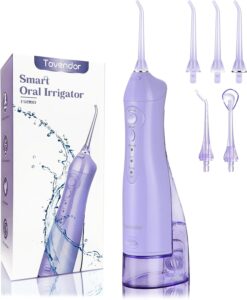
TOVENDOR Electric Water Flosser, Cordless Rechargeable Dental Oral Irrigator IPX7 Waterproof 300ML Travel Water Teeth Cleaner with 5 Tips for Braces Care Teeth Gums Cleaning, Home Office Daily Use
The TOVENDOR Electric Water Flosser is the better fit for daily use at home or in the office. The brand lists a 300ml water tank, five interchangeable tips and cordless rechargeable operation. It is IPX7 waterproof, and the brand describes it as portable enough for travel as well. Five tips make it practical for a household that shares one base, or for keeping spares on hand. The brand pitches it at braces care, gum cleaning and removing debris from hard-to-reach areas. It suits people who want fewer refills mid-session and do not mind a larger device. Skip it if counter space or bag space is tight, or if you mainly need a flosser for trips.
Cocofloss Expanding Woven Dental Floss by Cocolab, Waxed Tooth Floss for Daily Oral Care, Coconut Oil Infused, Vegan, for Adults and Kids, Mint Scent, 1 Pack
Cocofloss is the easiest upgrade for people who want to stick with string floss but find standard floss unpleasant. The brand says its woven texture expands during use to remove plaque and debris more effectively than traditional floss. It is waxed, infused with coconut oil and has a mint scent. Woven floss tends to feel softer against the gums than a thin, slick strand, which can make the habit easier to keep. The brand describes it as vegan and gentle enough for adults and kids. It suits people with average spacing who want a more comfortable daily floss. Skip it if your teeth are very tightly packed, since a thicker woven strand can be harder to slide through.
Davids Expanding Dental Floss + Refill w/Hydroxyapatite, No Break Woven Strands, Waxed, Vegan, Cocoa Butter & Mint, Kid Friendly, Refillable Dispenser, 66 yd
Davids Expanding Dental Floss is for string-floss users who want a woven floss with less plastic waste. The brand says its no-break woven strands expand during use to remove plaque and trapped food without breaking. It is waxed and infused with hydroxyapatite, cocoa butter and mint. It comes as a refillable dispenser plus a refill, with 66 yards listed in the product title. The brand describes it as vegan and kid friendly, so it can work for a whole household. It suits people who like the idea of refilling instead of buying a new plastic dispenser each time. Skip it if you have very tight contacts or prefer floss picks to winding floss by hand.
SlimWeave Extra-Thin Flat Dental Floss for Tight Teeth, Shred-Resistant Dental Tape, Waxed Smooth Glide, Mint + Xylitol, 3-Pack (164 yd Total)
SlimWeave is built for people whose teeth are so close together that regular floss shreds, snags or snaps. The brand describes it as an extra-thin, flat dental tape with a waxed coating that glides between narrow spaces without fraying. It is infused with mint and xylitol for a fresh finish. The three-pack provides 164 yards in total, so it lasts a while and is easy to split between bathrooms or a travel bag. Sliding it in at a gentle angle rather than forcing it straight down helps in the tightest spots. It suits anyone who has given up on floss because of tight contacts. Skip it if you have wide gaps, braces or implants, where woven floss or a water flosser usually works better.
PUL Mint Dental Floss Picks – Biodegradable Floss Sticks with Shred-Resistant Teeth Floss, Fluoride Free Dental Flossers for Adults & Kids, Minty Fresh Dental Floss Picks – 50 Count
PUL Mint Dental Floss Picks are for people who will not wind string floss around their fingers but will grab a pick. The brand describes them as biodegradable floss sticks with shred-resistant floss, a fluoride-free design and a mint flavor. The pack contains 50 picks and is marketed for adults and kids. Picks are easy to keep in a desk drawer, car or travel bag for quick cleaning after meals. Tilting the pick so the floss curves against each tooth gets you closer to the result of hand-held floss. They suit busy people and anyone who struggles with hand dexterity but does not want a device. Skip them if you want maximum control or have braces, since picks cannot reach around hardware easily.
Final Thoughts: Water Flosser or String Floss?
So, which should you buy? Choose a water flosser if you have braces, implants or bridges, limited dexterity, sensitive gums that make floss uncomfortable, or a long history of skipping floss. Choose string floss if you have tight contacts, want the lowest-cost option, have little space or already floss well. Choose floss picks if convenience is what will finally make the habit stick. Combining a water flosser with string floss is a reasonable choice if you want the strengths of both. Whatever you pick, start gently, be consistent and give your gums a week or two to adjust. Light bleeding at the start is common, but heavy or lasting bleeding is worth raising with your dentist.
Cleaning between your teeth is one part of a bigger routine that includes brushing twice a day and regular checkups. If you are building that routine from scratch, our list of dentist-recommended dental essentials covers the basics. If you are also thinking about brightening your smile, our breakdown of whitening toothpaste vs whitening strips explains what is worth trying. Keep your water flosser clean by emptying and drying the tank after use. Replace tips and floss picks as they wear, and store floss somewhere dry. Ask your hygienist to check your technique at your next visit, since a quick demonstration can make a big difference. The best flossing tool is the one you will reach for tonight and every night after.
Top Water Flosser and Floss Picks
Water Flossers for Braces, Implants and Travel
Water flossers clean between teeth with a pulsing stream of water instead of a strand, which makes them a popular choice for people with braces, implants, bridges or sensitive gums. Both picks here are cordless, rechargeable and IPX7 waterproof, according to their brands. The usmile C10 is the compact option, with four cleaning modes, a 180ml tank and up to 95 days of battery life listed by the brand. The TOVENDOR model trades some portability for capacity, with a 300ml tank and five interchangeable tips. Start either one on its gentlest setting and aim the stream at the gumline, pausing briefly between teeth. Expect a little splashing for the first few sessions while you learn the technique. If you mainly floss at home, the larger tank is more convenient, while frequent travelers will appreciate the smaller, long-lasting model. Neither replaces brushing, but both make daily between-teeth cleaning far easier for many people.



String Floss for Everyday Use and Tight Teeth
String floss cleans by direct contact, scraping plaque from the sides of each tooth and reaching tight contact points that water can only flush. These four picks cover the most common reasons people give up on floss. Cocofloss and Davids use expanding woven strands that the brands say remove more plaque and feel softer on the gums. Davids adds a refillable dispenser for a lower-waste routine. SlimWeave is an extra-thin flat tape for teeth so tight that regular floss shreds or snaps. PUL floss picks are the quickest option for busy days and for people who struggle to wind floss around their fingers. Whichever you choose, curve the floss into a C shape against each tooth and avoid snapping it down onto the gums. String floss is inexpensive, portable and needs no charging, which makes it easy to keep in a bag or desk drawer.

Water Flosser vs String Floss: How to Choose
What to Look For
- A method that fits your mouth: Water flossers suit braces, implants and bridges. Thin or flat floss suits tight teeth, and woven floss suits average spacing.
- Adjustable pressure: For water flossers, several pressure settings let you start gently on tender gums and increase over time.
- Practical capacity and battery: A larger tank means fewer refills at home, while long battery life and a compact body matter more for travel.
- Smooth, shred-resistant floss: Waxed, woven or coated floss glides more easily and is less likely to fray between teeth.
- Ease of use: Floss picks or a water flosser can make the habit stick for people with limited dexterity.
What to Avoid
- Replacement claims: Skip any product that suggests it replaces brushing or professional cleanings.
- Wrong floss for your spacing: Thick floss shreds in tight contacts, and very thin tape does little in wide gaps.
- Starting on full power: High water pressure on day one can make gums sore and put you off the habit.
- Snapping and sawing: Forcing floss down onto the gums or sawing back and forth can irritate them.
- Vague listings: Products without clear specs or materials make it hard to know what you are buying.
How to Use the Product Correctly
- Water flosser technique: Lean over the sink, start on the lowest setting, aim the tip at the gumline and pause briefly between teeth.
- String floss technique: Curve the floss into a C shape against each tooth and move it gently up and down, using a fresh section for each gap.
- Floss picks: Tilt the pick so the floss curves against each tooth, and use a new pick once the floss frays.
- Pick a consistent time: Floss before or after brushing, whichever you will stick with. Pair it with a good toothbrush for a complete routine.
- Maintain your tools: Empty and dry the water flosser tank after use and replace tips as the manufacturer recommends.
How to Match it to Your Needs
- Braces, implants or bridges: A water flosser reaches around hardware more easily. Ask your orthodontist or dentist what they prefer.
- Tight teeth: Extra-thin flat floss slides into narrow spaces where thicker strands fail.
- Limited dexterity: A water flosser or floss picks are easier to manage than winding floss around your fingers.
- Frequent travel: A compact, long-battery water flosser or a pack of floss picks keeps the habit going away from home.
- Low-waste routines: A refillable floss dispenser or biodegradable picks cut down on plastic.
Water Flosser vs String Floss Comparison Table
| Product | Best For | Key Feature |
|---|---|---|
| usmile C10 Portable Water Flosser for Travel – 95-Day Battery - 4 Modes 360° Nozzle 180ml Tank IPX7 Waterproof Dentist-Recommended for Braces Implants & Sensitive Gums(Purple) | Travel and braces cleaning | 95-day battery, 4 modes, 180ml tank |
| TOVENDOR Electric Water Flosser, Cordless Rechargeable Dental Oral Irrigator IPX7 Waterproof 300ML Travel Water Teeth Cleaner with 5 Tips for Braces Care Teeth Gums Cleaning, Home Office Daily Use | Home and office water flossing | 300ml tank with 5 tips |
| Cocofloss Expanding Woven Dental Floss by Cocolab, Waxed Tooth Floss for Daily Oral Care, Coconut Oil Infused, Vegan, for Adults and Kids, Mint Scent, 1 Pack | Comfortable string flossing | Expanding woven, coconut oil infused |
| Davids Expanding Dental Floss + Refill w/Hydroxyapatite, No Break Woven Strands, Waxed, Vegan, Cocoa Butter & Mint, Kid Friendly, Refillable Dispenser, 66 yd | Low-waste string flossing | Refillable dispenser, woven strands |
| SlimWeave Extra-Thin Flat Dental Floss for Tight Teeth, Shred-Resistant Dental Tape, Waxed Smooth Glide, Mint + Xylitol, 3-Pack (164 yd Total) | Tight teeth | Extra-thin flat, shred-resistant tape |
| PUL Mint Dental Floss Picks – Biodegradable Floss Sticks with Shred-Resistant Teeth Floss, Fluoride Free Dental Flossers for Adults & Kids, Minty Fresh Dental Floss Picks – 50 Count | Quick flossing on the go | Biodegradable floss picks |
Frequently Asked Questions
Is a water flosser better than string floss?
Not across the board. Research comparing the two is mixed, and both can help gum health when used daily. String floss scrapes plaque from tight contact points, while a water flosser flushes debris and is often easier and more comfortable. The better choice is the one you will use consistently, so consider your teeth, any dental work and your habits.
Can a water flosser replace string floss completely?
For many people, a daily water flosser is a reasonable way to clean between teeth, especially with braces, implants or limited dexterity. Some dentists still suggest string floss for tight contacts or specific problem spots. If you are unsure, ask your dentist or hygienist which method suits your gums and teeth, and whether combining both makes sense.
Are water flossers good for braces and implants?
Yes, they are a popular choice for braces, implants and bridges because the water stream reaches around brackets, wires and restorations that floss has trouble threading through. Start on a low pressure setting and work up gradually. Your orthodontist or dentist can confirm the best approach for your specific appliances or implants.
Why do my gums bleed when I floss?
Light bleeding is common when you start cleaning between teeth regularly, with either string floss or a water flosser, and it often eases within a week or two of gentle, consistent use. Bleeding that is heavy, painful or does not improve after a couple of weeks is worth raising with your dentist, along with swollen gums or persistent bad breath.
Should I floss before or after brushing?
Either order works. Some people floss first to loosen debris so brushing can clear it away, while others prefer to floss last. What matters most is cleaning between your teeth every day. Choose the order that is easiest to stick with, whether you use string floss, floss picks or a water flosser.
What kind of floss is best for tight teeth?
Extra-thin flat floss, often called dental tape, is usually the easiest option for tight contacts because it slides into narrow spaces with less shredding. Waxed floss also glides more smoothly. If floss consistently catches or tears in the same spot, mention it to your dentist, since a rough filling edge or tartar buildup may be the cause.
Are floss picks as good as regular floss?
Floss picks are convenient and much better than skipping between-teeth cleaning, but they offer less control than hand-held floss because they cannot wrap fully around each tooth. Tilting the pick so the floss curves against the tooth helps. Many people use picks on busy days and regular floss or a water flosser when they have more time.
-
➜
Electric Toothbrush Brush Head Cost: The Hidden Expense (2026)
➜
Best Dental Care Products for Sensitive Teeth in 2026
➜
Water Flosser vs String Floss: Which Should You Buy?
➜
Whitening Toothpaste vs Whitening Strips: What Actually Works
➜
Top Dental Care Essentials for a Healthier Smile: Expert Picks
Meet your guide

By Arjun Mehta
Arjun Mehta is a fashion and lifestyle writer specialising in women's accessories, seasonal trend forecasting, and personal style. With over eight years of experience in the fashion content space, Arjun has built a reputation for translating complex runway narratives into clear, shoppable guidance that real women can act on. His editorial focus spans handbags, jewellery, footwear, scarves, and wardrobe investment pieces — categories he covers with a researcher's rigour and a stylist's eye. Arjun closely follows the collections of major fashion houses including Prada, Bottega Veneta, Loewe, The Row, Toteme, and Miu Miu, and tracks the broader cultural conversations that shape what women actually want to wear each season. Before joining Recomonk, Arjun contributed to digital lifestyle and fashion publications where he developed a strong understanding of how trends move from the runway to the high street, and which pieces are worth investing in versus which are purely seasonal. His writing philosophy is simple: fashion should feel personal, not prescriptive. The best accessory is the one that makes you feel like yourself — only more so. When he's not tracking the season's next it-bag, Arjun enjoys exploring independent boutiques, analysing fashion week street style photography, and hunting for underrated vintage accessories. More from this author →


 Login with Google